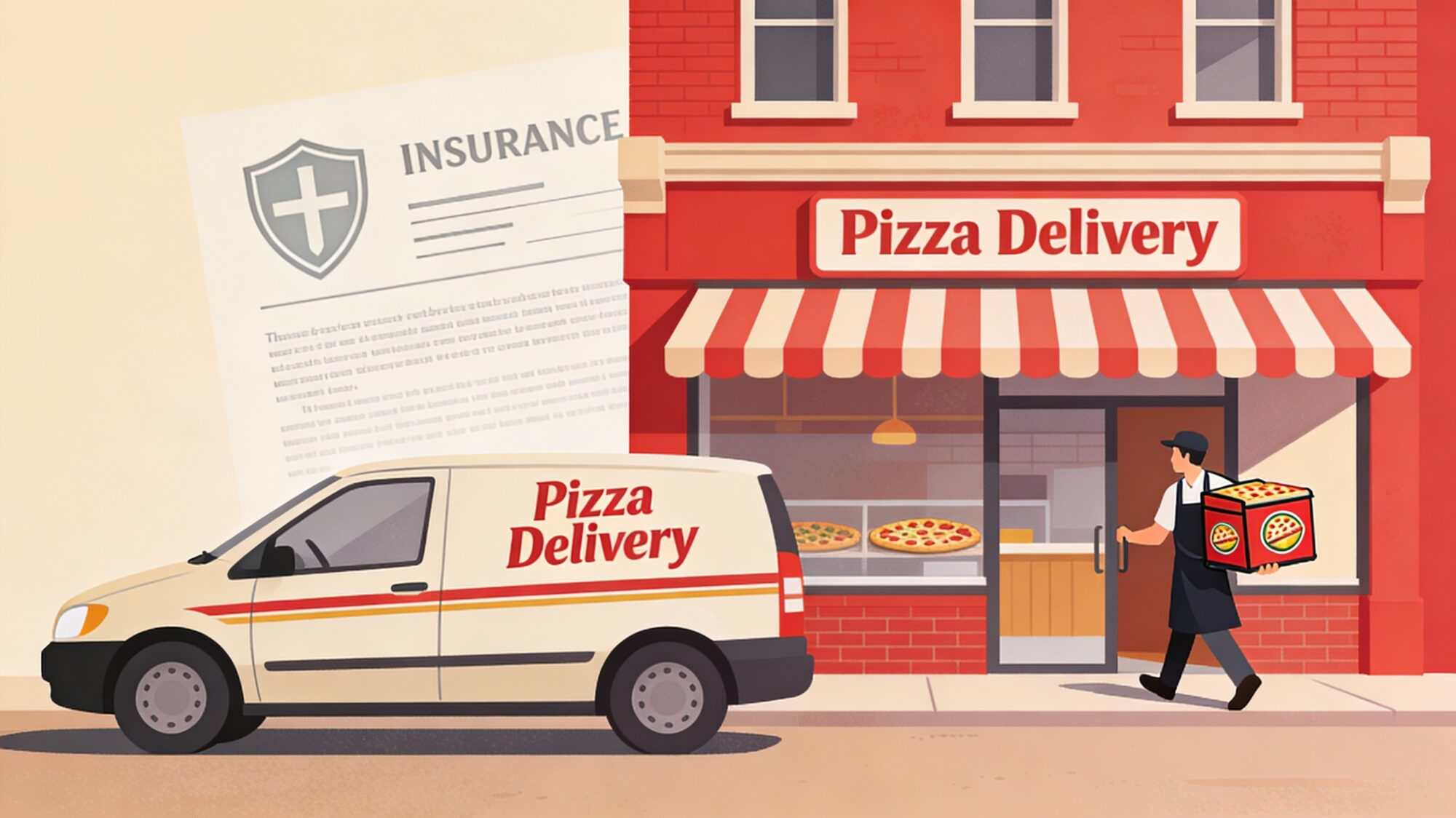
Hired and non-owned auto (HNOA) insurance is one of the most critical, and most misunderstood, coverages for pizza operators who rely on delivery whether that delivery is handled by employees in their own vehicles, company cars, or even certain third-party arrangements. When this coverage is missing or poorly structured, a single accident can quickly turn into a six- or seven-figure problem for the business.
Why Delivery Creates Unique Liability
When a driver uses a personal vehicle to deliver pizzas, the restaurant can still be pulled into a lawsuit if that driver causes an accident while “on the clock.” Many personal auto policies exclude or severely limit coverage for business or delivery use, which means the driver’s insurer may deny the claim or pay only a small portion of the damages. In that scenario, plaintiffs and their attorneys will look to the pizza business its assets, its brand, and its balance sheet to make up the difference.
HNOA coverage is designed to respond to these types of claims, providing liability protection for bodily injury and property damage when non-owned or hired vehicles are used in the course of business. For pizza and restaurant delivery, where most drivers use personal cars and turnover can be high, this coverage becomes a core component of a responsible risk management strategy, not an optional add-on.
Why Agent Expertise Really Matters
Although HNOA is a standard concept in commercial insurance, the way it is underwritten, priced, and limited for delivery heavy accounts is highly specialized. Carriers differ on what constitutes “delivery,” driver eligibility, contract requirements with third-party services, and which losses are excluded, so a pizza operator working with a generalist agent can easily end up with dangerous gaps in protection. A knowledgeable delivery-focused agent will address issues like driver screening, MVR standards, minimum limits, and franchise or lender requirements before a claim ever happens.
Main Street Partners works with pizza operators across the country, giving the agency visibility into national carrier programs, market trends, and evolving delivery risks that local-only agents often do not see. That national perspective allows an experienced specialist to benchmark limits, negotiate with markets that actively write pizza delivery, and tailor HNOA and related coverages to different states, franchise systems, and growth plans. For owners, that means one thing: when a driver has a bad day on the road, the insurance program is built so the accident doesn’t become a business-ending event.